Dating Apps
Dating app burnout is real. Here's how to recover from it.
 By Kenneth Kintsugi, holistic relationship specialist · Feb 24, 2026 · Updated Sep 20, 2026 · 7 min read
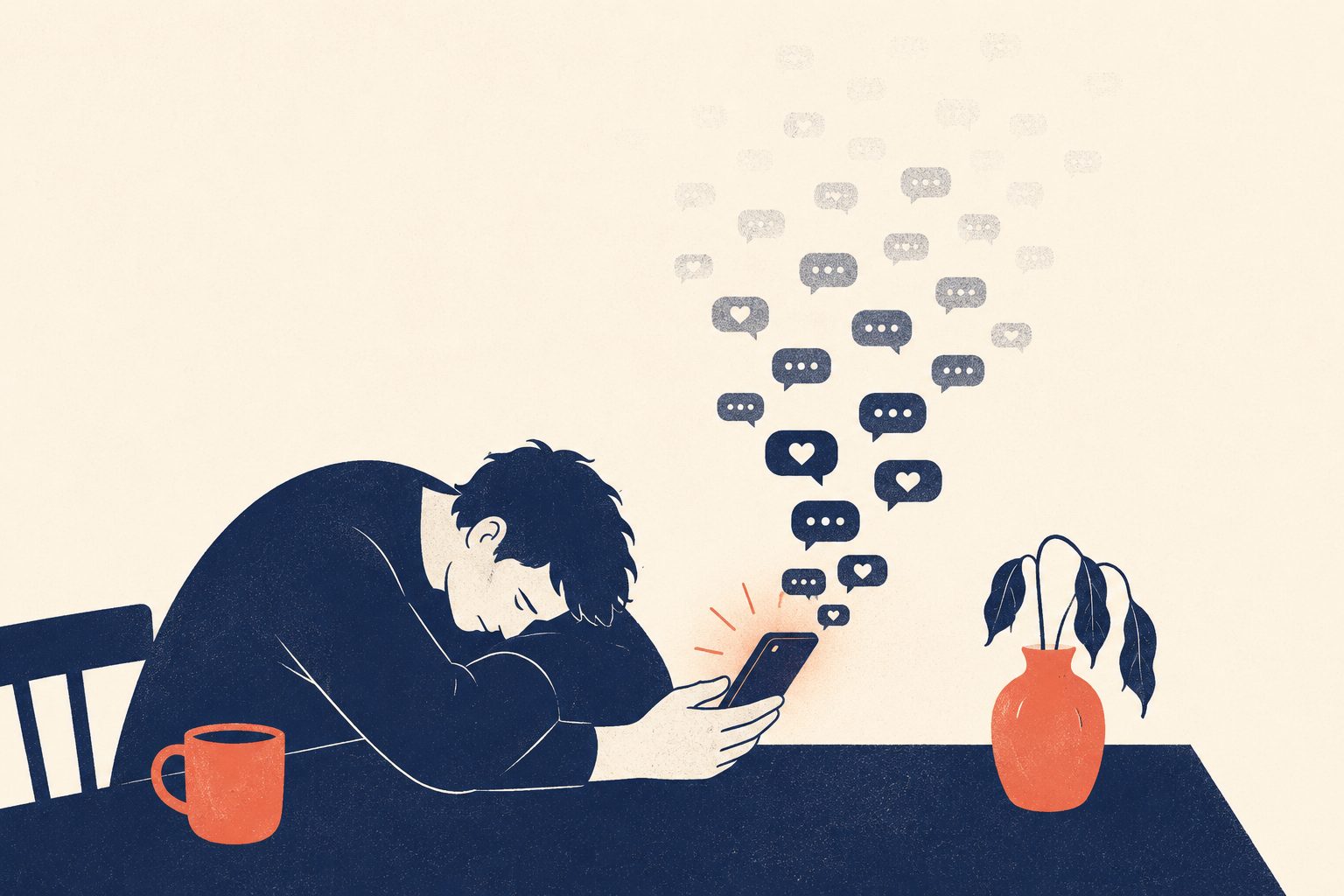
You open the app out of habit, swipe for a few minutes, feel a little worse, and close it. The matches that do happen fizzle in the messages. Dates, when they come, feel interchangeable. If that's you, you're not lazy or "too picky", you're burned out. And it's worth naming why, because the cause isn't you.
It's not just the apps. The exhaustion itself is real, and the CDC just measured it.
A September 2026 report from the CDC's National Center for Health Statistics, built from the 2024 National Health Interview Survey, put real numbers on adult fatigue in the US for the first time this way. It's not about dating apps specifically, but the overlap with who's swiping is hard to miss.
of US adults have frequent fatigue, most days or every day, about 1 in 6 people
NCHS, National Health Statistics Reports No. 221, 2026
of 18 to 34 year olds report frequent fatigue, the highest rate of any age group
NCHS, National Health Statistics Reports No. 221, 2026
frequent fatigue in women versus men, nearly 1.5 times the rate
NCHS, National Health Statistics Reports No. 221, 2026
Eighteen to thirty-four year olds, the demographic that does most of the swiping, report more frequent fatigue than any other age group, and most people with frequent fatigue also report anxiety symptoms (69.6%) or depression symptoms (45.0%) alongside it. None of that is caused by dating apps. But it means a lot of people opening an app already running on empty, which makes the feed's design (below) land even harder.
Why burnout happens (it's by design)
Swiping turns people into a feed. A feed is endless, fast, and shallow by nature, you're making split-second calls on strangers' photos, dozens of times a session. That does three things to your brain over time:
- It raises your bar and lowers your patience. Endless options make everyone feel replaceable, so you discard quickly and commit slowly.
- It rewards performance over honesty. You curate a highlight reel; so does everyone else. Real compatibility hides behind the polish.
- It never resolves. There's always one more profile, so there's no natural stopping point, just a slow drain.
Put together, that's a recipe for fatigue. (We unpack the structural side in matchmaking vs. dating apps.)
How to actually recover
Burnout lifts when you change the inputs, not just your attitude. A few things that help:
- Take a real break. Delete the apps for two to four weeks. The goal isn't punishment, it's resetting your baseline so dating feels like a choice again, not a compulsion.
- Get specific about what you want. Vague searching is exhausting. Write down the handful of things that genuinely matter to you (and the few that are dealbreakers). Clarity is calming.
- Trade volume for intention. One good conversation beats twenty lukewarm ones. Optimize for quality of attention, not quantity of matches.
- Protect your privacy. A lot of app fatigue is the low-grade stress of being publicly browsable. Channels that keep you anonymous until you choose to connect remove that weight.
A calmer model for finding someone
This is exactly the itch matchmaking scratches. Instead of performing for a feed, you answer a few thoughtful questions once, and a mix of AI and a real matchmaker brings you a small number of genuinely compatible introductions, with no swiping and no public profile. It's the opposite of the burnout loop: less effort, more signal.
Ready for a calmer way to date?
No swiping, no public profile. Answer a few questions and get matched on what actually matters.
Common questions
Is dating app burnout backed by real data?
Yes. A 2025 Forbes Health survey found 78% of daters report burnout with the apps themselves, and separately, a September 2026 CDC report found 16.6% of US adults, about 1 in 6, have frequent fatigue, meaning most days or every day. Adults 18 to 34, the core dating-app demographic, report the highest rate of any age group, at 19.5%. The apps aren't the only source of the exhaustion, but the exhaustion itself is real and measured, not a personal failing.
Why do 18 to 34 year olds report the most burnout?
Partly the apps' design, and partly a broader pattern: CDC fatigue data shows 18 to 34 year olds report frequent fatigue at 19.5%, higher than every older age bracket, and women report it at nearly 1.5 times the rate of men, 20% versus 13%. Whatever is driving general fatigue in that group compounds whatever the apps are doing on their own.
Is dating app burnout the same thing as being generally exhausted?
Not exactly, but they overlap. The CDC's report separates general fatigue from any single cause, and adults with frequent fatigue are also more likely to report anxiety symptoms (69.6%) and depression symptoms (45%). If deleting the apps for a few weeks doesn't help much, the exhaustion may be coming from somewhere broader than swiping, and worth naming as such.
Methodology & limitations
- The CDC figures are cross-sectional survey data from the 2024 National Health Interview Survey (31,917 adults), not a trial about dating apps. They establish that fatigue is common and skews younger and female; they don't establish that dating apps cause it.
- The Forbes Health burnout figure (78%) is a self-reported survey about dating-app experience specifically, a different data source measuring a related but distinct thing.
- Anxiety and depression figures are self-reported symptoms, not clinical diagnoses, and the CDC presents them as co-occurring with fatigue, not caused by it.
Sources
- National Center for Health Statistics, Fatigue Among Adults Age 18 and Older: United States, 2024, National Health Statistics Reports, No. 221, Sept 3, 2026.
- Forbes Health, Survey: 78% Of Daters Report Dating App Burnout, Jul 2025.
Figures are rounded as published. See each source for full methodology.