Dating Apps
Your dating app is supposed to fail you
 By Matthew Firth, founder of NexSpark · Jun 6, 2026 · 4 min read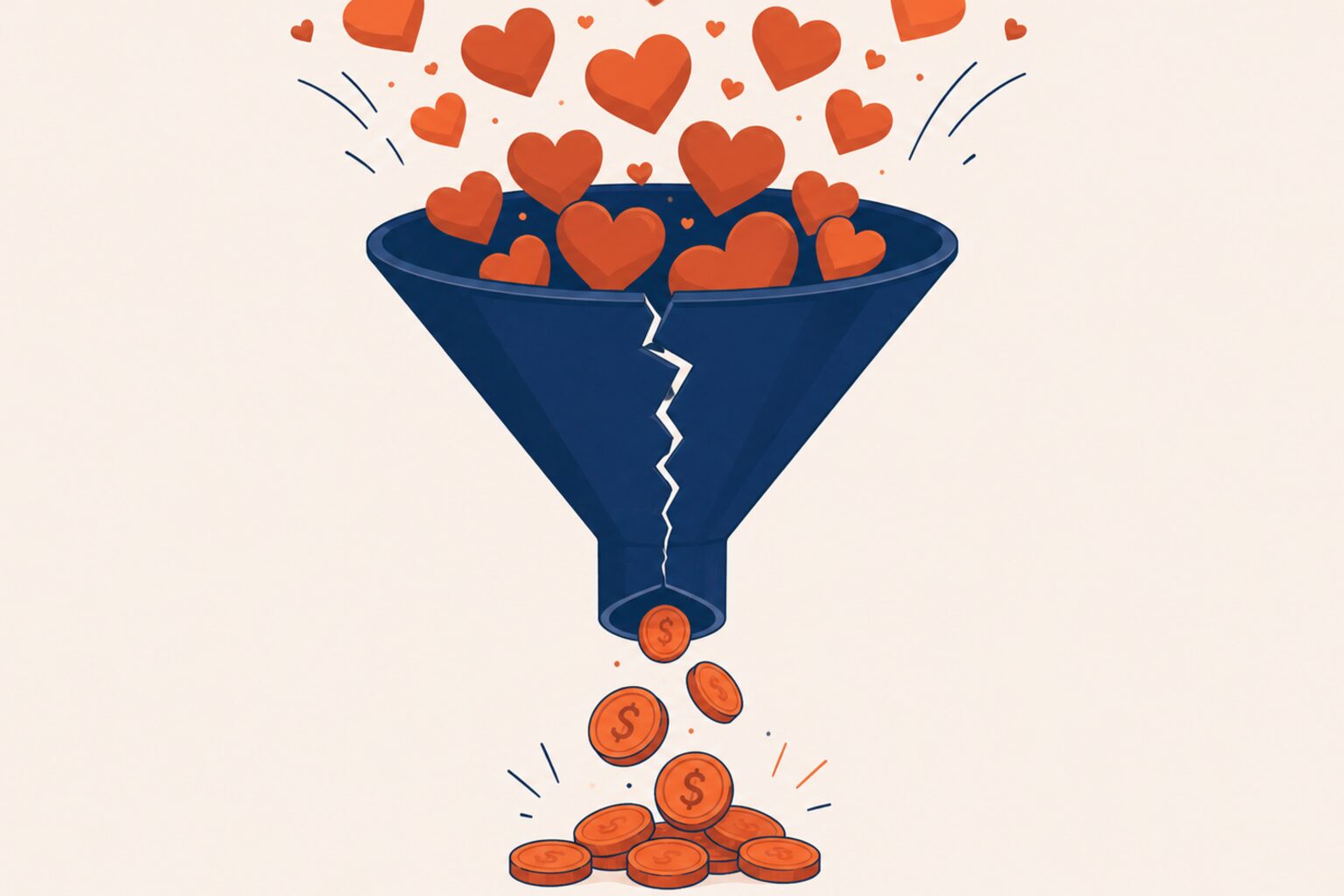
A friend recently told me he'd been on the same dating app for three years. Three years of swiping, matching, a few dates, nothing that stuck, and yet every night, there he was, thumb moving. He blamed himself. He shouldn't have. He was using a product that is working exactly as designed. The design is the problem.
A system optimizes for what it's rewarded for
I've spent thirty years building software systems, and if that career taught me one thing, it's this: a system optimizes for whatever it's rewarded for, not for whatever you hoped it would do. I learned it running high-traffic e-commerce, where every pixel is tuned to the metric that pays. I learned it most vividly in telecom expense management, an entire industry that exists for one reason: the incentives of telecom billing are misaligned with what customers actually use, so companies need specialists to claw back the difference. Misaligned incentives don't announce themselves. They quietly bend the product away from the human using it.
How a swipe app actually makes money
How does a swipe-based app make money? Subscriptions, boosts, and the steady drip of features that promise to fix the very frustration the app created, pay to see who liked you, pay to be seen, pay to undo. Revenue is a function of time-on-app and recurring payments. Read that again, because it's the whole story. The app earns when you keep coming back. A relationship that works, one that makes you delete the app, is, in the cold language of the business model, churn.
No one in a product meeting says "let's keep users single." They don't have to. They say "improve retention," "increase daily active users," "lift conversion on the premium tier." Reasonable goals for almost any business. For a dating business, they point in precisely the wrong direction. The machine learns to be engaging, not effective. It serves you a slot machine of faces because variable rewards keep thumbs moving, and it gates the genuinely useful parts behind a paywall, because solved problems don't recur and recurring revenue is the point. The product isn't failing you. It's succeeding at its actual objective, which was never your relationship. (It's the same machinery behind dating-app burnout.)
The honest counterpoint
I want to be fair, because the honest version of this argument has to be. Dating apps did something real: they made it possible to meet people far outside your existing circle, and plenty of happy couples met by swiping. Scale and access have genuine value. And no model is a magic wand, matchmaking is hard, chemistry is unpredictable, and any service that promises certainty is lying. The critique is narrower and more stubborn than "these apps are evil": when the way a product makes money is decoupled from whether it solves your problem, the product will, over time, drift toward the money. That's not a moral failing. It's gravity.
Ask what the business is rewarded for
So the question I'd put to anyone evaluating any product, especially one as consequential as how you find a partner, is brutally simple: what is this business rewarded for? If the answer is "your attention" or "your monthly fee," then that's what it will optimize for, no matter what the marketing says. If you want a product that's actually trying to get you off the product, you have to find one whose revenue depends on exactly that.
That principle is why I started building differently. The model I believe in is boring in its honesty: the service should earn only when two people actually choose to connect, not for hours spent scrolling, not for a subscription that bills whether or not anything good happens. Free to join, free to be matched; a real matchmaker, with AI doing the heavy lifting of comparison, surfaces a few genuinely compatible people instead of an infinite feed. (That's the bet I've made with NexSpark, so consider the source, but the logic stands on its own.) Align the payment with the outcome, and the incentive to keep you single simply isn't there. We go deeper on that contrast in matchmaking vs. dating apps.
You don't have to take my word for any of this. Just do the exercise. Open the app you use most and ask what it's measured on. Notice which features are free and which cost money, and ask why those particular ones are behind the wall. Notice whether the product seems built to resolve your search or to extend it. The answers are usually sitting in plain sight, in the pricing page and the push notifications.
We accept, almost without thinking, that the tools meant to help us find love are paid to keep us looking. We shouldn't. Demand alignment. It's the one feature no boost can fake.
Choose the side that wins when you do
No feed, no swiping, no addiction loop. Get matched on what matters, and connect only when you choose.