Culture
What is cloaking? The dating move that's worse than ghosting
 By Kenneth Kintsugi, holistic relationship specialist · Jul 7, 2026 · Updated Aug 17, 2026 · 6 min read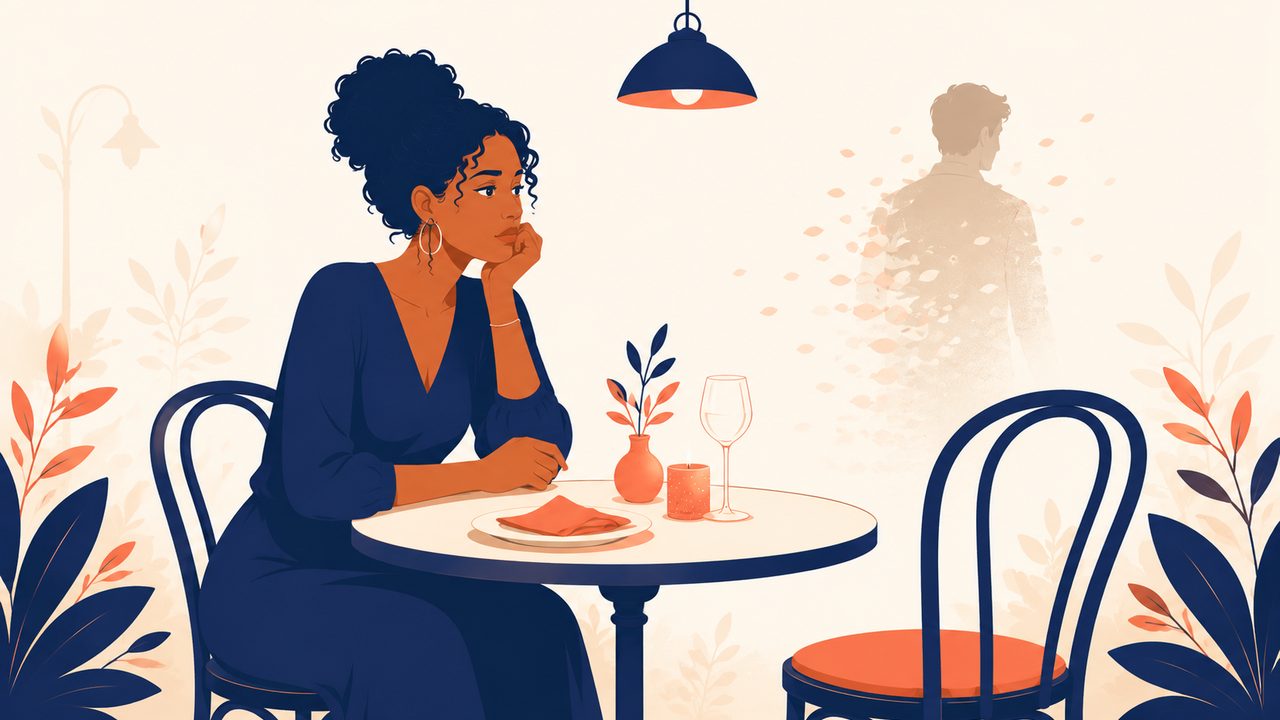
You've been texting for a week. The date is set: Thursday, 7pm, that wine bar you both liked the look of. Thursday comes. You're there early. They don't show. You text to check they're okay, and the message won't deliver. You check the app. The match is gone. Instagram? Blocked. It's like the person deleted themselves out of your life mid-sentence. That's cloaking, and it's one of the ugliest things going in dating right now.
Cloaking, defined
Cloaking is when someone stands you up for a date and, in the same stroke, blocks you on every channel you had them on. Not a slow fade. Not a "hey, something came up." A clean disappearance timed to the exact moment they were supposed to walk through the door. Ghosting leaves a door ajar. Cloaking bricks it up and paints over the wall.
The word borrows from sci-fi, a cloaking device makes a ship vanish from radar. Same energy. One minute a person exists in your life; the next there's no trace they were ever there.
It has a cousin worth knowing too: haunting, where someone who ghosted you doesn't fully vanish, they linger at the edges, liking old posts and watching your stories without ever actually talking to you again. Cloaking erases you. Haunting just refuses to leave, quietly.
Cloaking vs. ghosting: what's actually different
Ghosting is the wider umbrella. It covers any case where someone stops responding and never explains why, whether that happens after one opening message, three good dates, or a months-long situationship that quietly fizzles. Cloaking is a sharper, more deliberate version of the same thing: total and timed rather than gradual. Every cloak is a ghost. Not every ghost is a cloak. The distinction matters because it tells you something about intent. A slow fade that eventually goes quiet often looks like indecision or avoidance. A block that lands the second the reservation time hits looks like a plan.
Why it feels so much worse than ghosting
Ghosting is cowardly, but it's ambiguous, and ambiguity at least leaves you a story where they got busy or scared. Cloaking removes the ambiguity and adds contempt. You showed up. You waited. And the choreography, the blocking, the timing, tells you they thought about this and decided your evening and your dignity weren't worth a two-line text. It lands as a small public humiliation even when nobody else saw it.
You're not the only one this has happened to
If it stings more than it should, that's partly because it's common enough to be a shared experience rather than a personal failing. Pew Research has found that a majority of people who have tried online dating, and about 6 in 10 of those currently using it, say they've been ghosted by someone they were talking to or seeing. Cloaking is the sharper, more theatrical end of that same behavior, not a rare cruelty invented against you specifically. That doesn't make it hurt less. It does mean the story "there's something wrong with me" doesn't hold up against how often this happens to people who did nothing to deserve it.
Why it happens
Cloaking is a product of the environment, not just bad individuals. When you match with strangers at volume, no shared friends, no accountability, no reason to ever see this person again, the social cost of behaving badly drops to zero. There's no aunt who'll hear about it, no coworker who set you up and will ask how it went. The app made the other person disposable, so some people dispose of them. Anonymity plus infinite supply is a recipe for cruelty, and cloaking is what that recipe tastes like.
Reducing your odds of it happening again
You can't stop someone else from cloaking you, but a few habits lower how often you end up waiting at an empty table. Confirm the plan again the morning of, not just when it's first set, someone already planning to disappear tends to go quiet or vague the moment you check in. Suggest a public, easy-to-leave first meeting rather than something with a deposit or a hard-to-cancel booking, so there's less riding on it if they don't show. And notice if all the momentum has been one-sided in the run-up, if you're the one proposing every detail and chasing every reply before the date has even happened, that imbalance is often visible days before the block is.
If it happens to you
- Read it as data, not a verdict. Cloaking says everything about them and nothing about you. Someone who can vanish like that was never a safe bet for the thing you actually want.
- Don't chase the closure. A person who blocked you to avoid one text will not give you a satisfying explanation. The block is the explanation.
- Screenshot and move on. If it happened through an app, report it. Then close the loop in your own head and give the evening to someone who deserves it, starting with yourself.
- Don't let it make you colder. The natural response is to armor up and expect the worst from everyone. That's how the good ones start paying for the bad ones. Stay open, just be pickier about the context.
The context is the fix
Here's the uncomfortable truth the apps won't advertise: cloaking is rare in worlds where people are accountable to each other. Get set up by a friend and the other person knows there are consequences. Meet through a matchmaker and there's a real human who introduced you, who both of you will talk to again. Accountability doesn't make anyone a saint, but it reliably keeps decent people behaving decently. Strangers-at-scale removes it. That's the whole difference.
NexSpark is built on the opposite of anonymity. Everyone's verified, a real matchmaker makes the introduction, and nobody is a swipe you'll never see again. It doesn't just feel safer. Structurally, it is.
Date where people are accountable
A few honest NexSpark questions reveal your archetype and the kind of person who fits you. Then a real matchmaker introduces you to verified people who actually fit, no anonymous swiping, no disappearing acts.